
Fabric Building Use
Sand & Salt Storage Dome
Greystone leads the nation in providing efficient, cost-effective, and high-quality salt and sand storage buildings
We have 25+ years of salt storage building experience and over 2,000,000 SF of salt under roof to date. You can depend on Greystone to successfully design and construct your salt storage dome or bulk salt storage building. We can assist government entities with building specification writing and the Sourcewell Cooperative Purchasing program.
Across the USA, we are trusted by hundreds of municipalities, DOTs, and private firms for our salt storage building solutions.
Here are just a handful of our sand storage sheds and road salt storage domes.

Top 6 Building Design Factors for Sand and Salt Storage Buildings
We have a few best practices to share for planning efficient, safe and cost-effective facilities for salt storage structures.
1. Load Requirements
Any building needs to be designed to meet local wind, snow, seismic and unbalanced snow loads. Fabric buildings are no different. A structurally sound building must follow current International Building Codes (IBC) not just for safety, but for insurability.
2. Capacity Requirements
Greystone knows the density and angle of repose of deicing salt -- factoring this in with a customer’s storage capacity requirements and available footprint, their estimating team calculates the most economical building width and length.
3. Reducing Risk of Corrosive Damage
Salt is highly corrosive. We recommend all building steel be hot-dip galvanized after production. This treatment achieves a much thicker and harder protective surface than in-line galvanizing. It also ensures that the steel trusses are coated both inside and outside after welding is completed.
4. Ventilation
In the absence of moisture, corrosive materials would have little to no corrosive effect. You want air movement in your salt storage building to greatly reduce any condensation.
5. Consider Independent Foundations and Panels
 The combination of independent foundations engineered to carry building loads and pre-cast walls designed to carry commodity loads is often times more economical than cast-in-place poured walls designed to carry both building and commodity loads.
This building design also excels in reducing corrosion because it keeps salt away from the steel trusses and base plates. It also creates the greatest possible air movement throughout the building.
6. Sufficient Clearance
Adequate clear height is a critical factor to ensure maximum storage capacity. More importantly, sufficient clearance is necessary for safe maneuverability of trucks and dumping equipment.
If another jurisdiction is looking for a new salt storage building, I would recommend looking into one from Greystone — the new building is everything we envisioned it to be. Greystone met with us on-site several times to determine proper size and location. When the city awarded Greystone the contract, Greystone gave us engineered drawings, a build date and duration. They worked seamlessly with us and our parking lot contractor to get the project completed without any delays. We were so pleased with every aspect of the project from initial planning meetings through completion.
John Boland, Public Works Supt., Mendota Heights, Minn.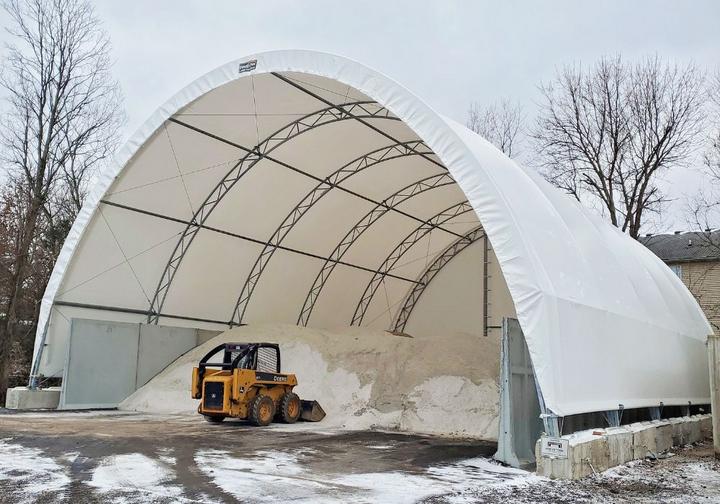
48' x 60' Salt Storage
Location: La Grange, Kentucky
Built on a block foundation with precast bunker panels and galvanized components, it offers durable, well‑ventilated salt storage.
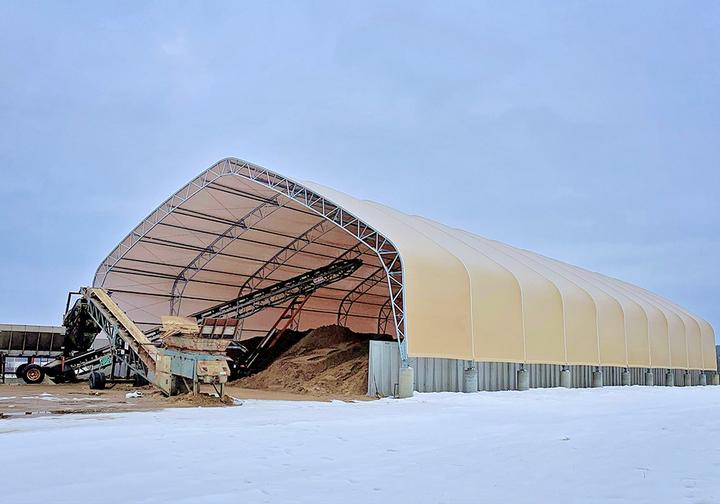
72' x 200' Salt Storage
Location: Richland Center, Wisconsin
The building utilizes an engineered pad and pier foundation and precast L bunker panels to deliver reliable, weather‑protected bulk storage.
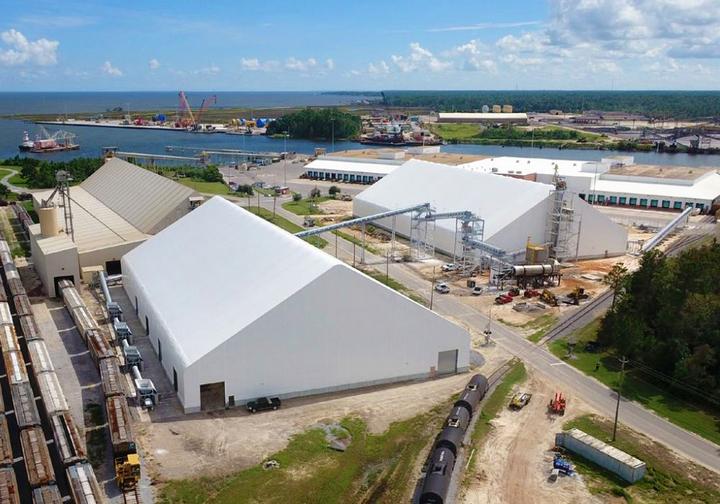
180' x 324' + 180' x 288' Salt Storage
Location: Mobile, Alabama
Engineered with FR‑rated fabric, galvanized steel, heavy‑load conveyor support, and multiple large framed openings, these structures deliver durable, weather‑protected bulk salt storage while maximizing efficient material handling at the port.
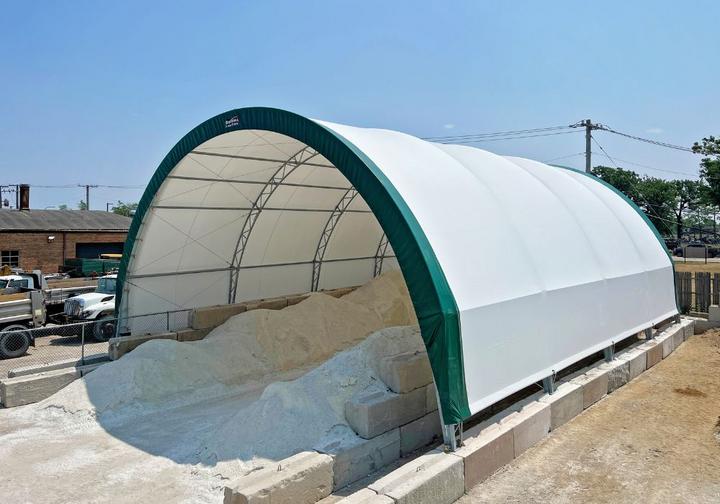
41' x 56' Salt Storage
Location: Hillside, Illinois
Featuring galvanized building components, a partial end wall with mesh vents for improved airflow, and a block containment wall on a block foundation, this fabric salt storage structure provides organized, well‑ventilated, and durable protection for the village’s salt supply year‑round.
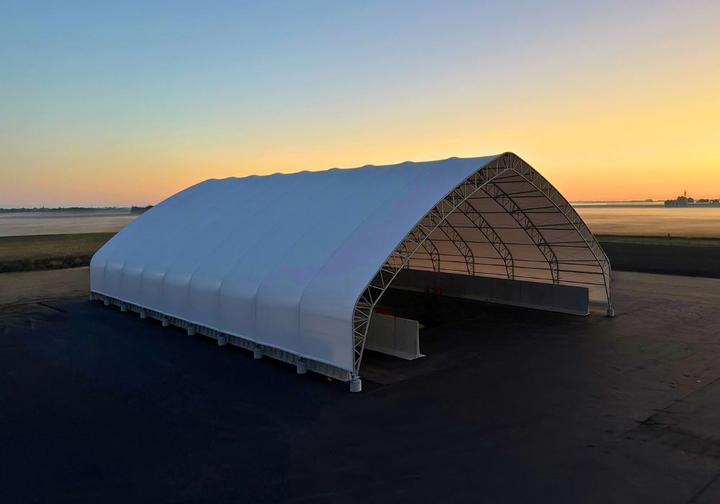
100' x 162' Salt Storage
Location: Mankato, Minnesota
Built with galvanized building components, corrosion‑inhibiting precast bunker panels, an interior divider wall for material separation, mesh ventilation, and an engineered concrete foundation to support durable and efficient salt storage.
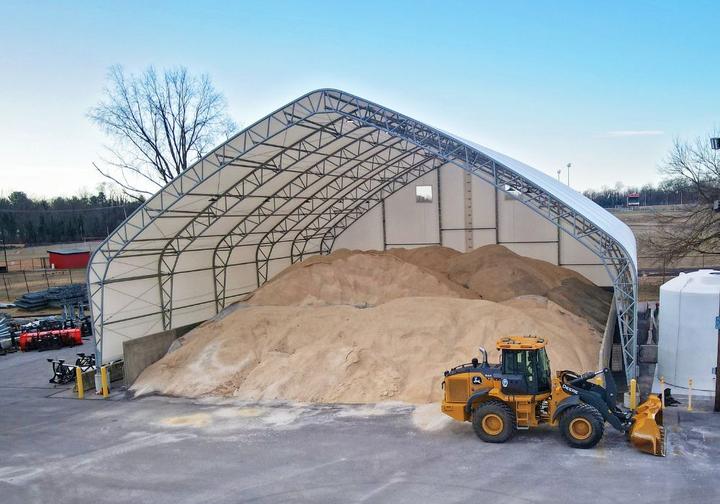
80' x 80' Salt Storage
Location: Hagerstown, Maryland
Constructed on an engineered pad and pier foundation and equipped with precast bunker panels, the structure supports smooth material handling while enhancing airflow and reducing long‑term corrosion.
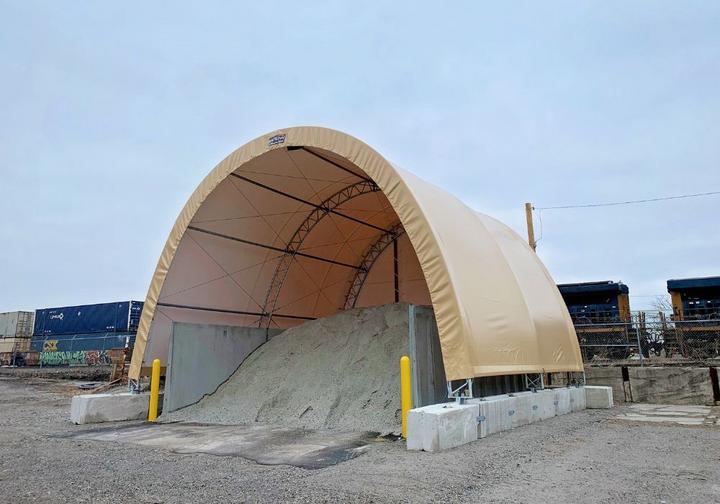
32' x 32' Salt Storage
Location: Garrett, Indiana
Designed to keep salt dry and easily accessible, the building is installed on block foundations with bunker panels that help keep corrosive salt away from structural components while delivering reliable performance throughout changing seasons.
52' x 70' Salt Storage
Location: Box Elder, South Dakota
Designed to protect municipal salt and sand supplies, the engineered fabric structure is built to withstand local 105‑mph wind loads and features galvanized building components, drilled pier foundations, and precast bunker panels for durable, weather‑resistant storage.
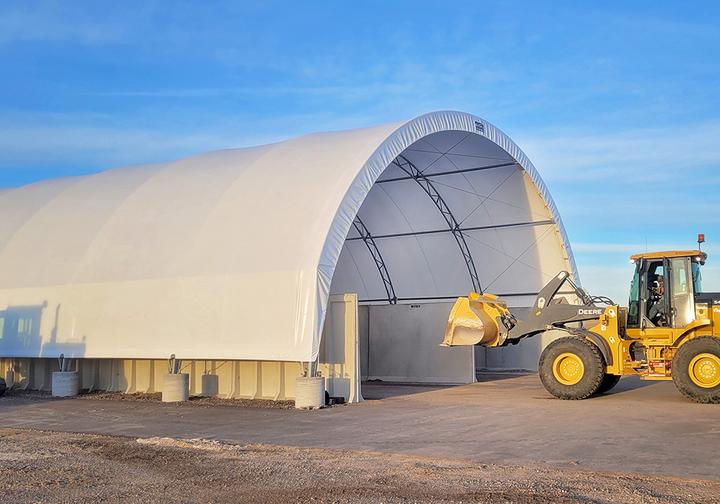
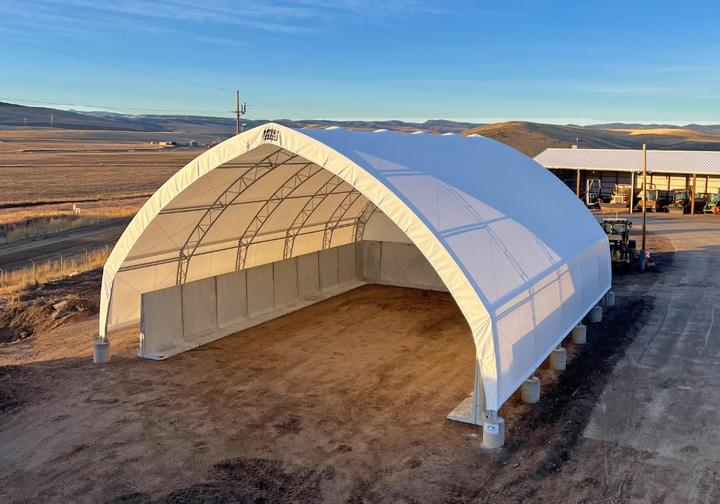
53' x 70' Salt Storage
Location: Hayden, Colorado
The building uses 8' precast L bunker panels, which will prevent spillover and reduce corrosion by keeping the salt away from the steel trusses.
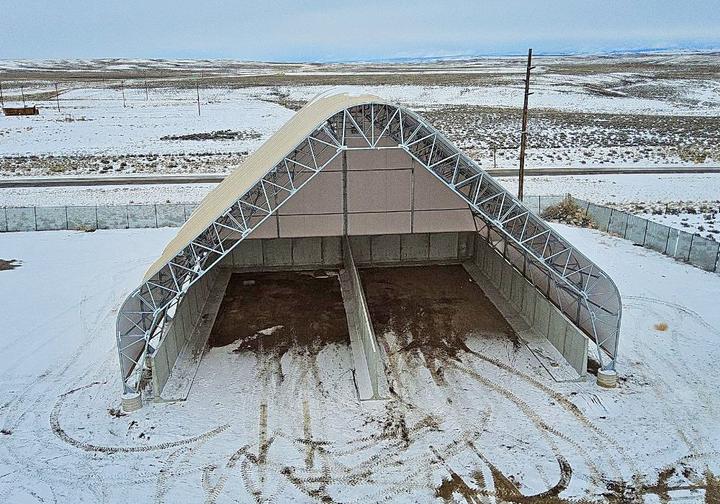
80' x 80' Salt Storage
Location: Big Piney, Wyoming
Built on an engineered pad and pier foundation, this fabric building features hot dipped galvanized building components, corrosion‑inhibiting precast L and T bunker panels with a center divider, and mesh ventilation to support durable, organized salt storage with a 2,200‑ton capacity.
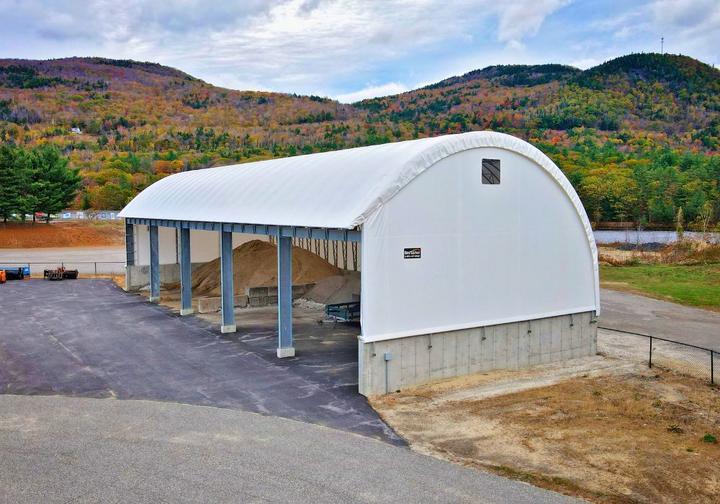
38' x 100' Salt Storage
Location: Woodstock, New Hampshire
Designed with five 20' x 16' framed sidewall openings, the building enables streamlined material handling and convenient equipment movement while maintaining overhead protection.
Photo Gallery
Sand Storage, Salt Storage Dome, Road Salt Storage Shed


